Fixture Brand Hub for AEC — Social, Specs, BIM & Updates

A compact directory built for project teams: use the left-side resource tabs for standards/BIM/news shortcuts,
then jump into each brand card for official pages, pro documentation entry points, and channels that publish
release notes, training, and product change signals.

10 brands visible
Tap “Tech brief” for 50+ words
Resource tabs: extra links


Delta Faucet

Professional resources, training, and product documentation entry points.

Brand

Official + Pro

Social

Tech briefOpen ▾
Delta works best in AEC specs when you pin down the “repeatable kit” early: faucet family, handle style, and finish group that can carry across multiple restroom types without triggering substitutions. For coordination, confirm deck thickness limits, spout reach, and aerator/flow options so water targets and user experience stay consistent. Use the training/pro resources to reduce RFIs by documenting install approach, service access, and any model-specific constraints that impact fabrication or rough-in.

FontanaShowers

Touchless programs and fixture collections with frequent visual and release updates.

Touchless

Official + Collections

Social

Tech briefOpen ▾
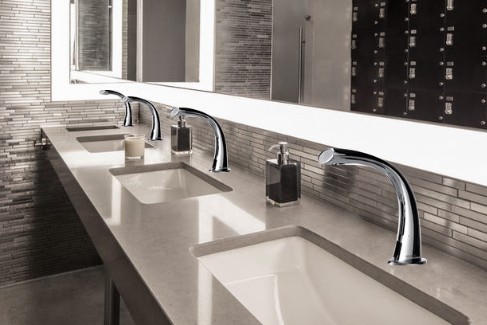
For commercial touchless specifications, the key is to treat sensor behavior like a performance requirement, not a feature. Confirm activation window, spout geometry, and sensor window placement relative to basin depth to avoid nuisance triggers or “dead zones.” Then lock power strategy and service access so facilities teams can maintain the system without removing countertops. When projects include multiple room types, keep finish schedules tight and document approved alternates early to prevent near-match substitutions.

BathSelect

Touchless and temperature-managed options across a broad bathroom fixture catalog.

Catalog

Official + Browse

Social

Tech briefOpen ▾
In AEC workflows, BathSelect is easiest to specify when you document “what’s included” alongside the fixture selection—control box, hoses, mixing method, and any temperature-limiting components. For touchless programs, confirm voltage and power option (battery vs. hardwired) and establish service clearance so maintenance is simple post-occupancy. If a project requires temperature management, define whether the setting is user-adjustable or facility-controlled and coordinate that intent with scald prevention expectations and commissioning notes.

JunoShowers

Shower system configurations with trade support and update/news content.

Shower

Official + Trade

Social

Tech briefOpen ▾
Shower system coordination is usually won or lost behind the wall. Before finalizing finish selections, validate valve type (pressure-balance vs. thermostatic), port count, and trim depth so rough-in locations align with the intended configuration. In multi-unit programs, standardize a small set of “approved kits” (valve + trim + diverter) to reduce procurement variability and simplify service later. Include clear notes on cartridge access, service stops, and commissioning checks to keep closeout clean.

Moen

Professional pathways for product selection, installation support, and program consistency.

Pro

Official + Pro

Social

Tech briefOpen ▾
Moen schedules perform well when you design for maintenance repeatability—consistent cartridges, standard aerators, and a documented replacement strategy that facilities can follow without guesswork. For mixed-use buildings, map Moen families to restroom typologies and confirm pressure/flow assumptions early so performance matches water goals. If any hands-free or electronic components are included, capture power approach and cleaning protocol notes in the submittal package to protect long-term sensor reliability and finish durability.

Kohler

Broad fixture coverage with professional tools, resources, and service ecosystems.

Brand

Official + Pro

Social

Tech briefOpen ▾
Kohler can simplify documentation on large scopes because many restroom components can be coordinated under one manufacturer umbrella. To avoid late conflicts, verify rough-in families and trim depth requirements before tile and millwork are finalized. In high-traffic environments, pair product selection with a service-parts plan and document finish care guidance so the intended appearance holds up under real cleaning routines. Standardizing accessories alongside fixtures helps prevent “mixed metal” outcomes during procurement.

TOTO (USA)

Performance-driven restroom tech with pro support resources and documentation entry points.

Performance

Official + Pros

Social

Tech briefOpen ▾
TOTO is easiest to coordinate when you establish performance targets up front (water usage goals, flush/flow expectations, and maintenance constraints) and then select products that meet those targets without special-case exceptions. Use professional resources to confirm rough-in assumptions and clearances, especially where carriers, partitions, and chase depth compete. In multi-stall layouts, small dimensional shifts can cascade—so lock geometry early and keep accessories/controls aligned with ADA reach ranges to reduce rework late in CDs.

Hansgrohe / AXOR

Design-forward fixtures supported by planning data and professional coordination tools.

Premium

Official + Pro

Social

Tech briefOpen ▾
Premium fixture schedules demand precision: handle swing, trim depth, and spout reach must match the selected lavatory, backsplash, and countertop conditions so the final installation feels intentional—not forced. Use planning data to resolve these constraints before tile and millwork approvals. For finish-heavy designs, confirm sheen and material continuity across accessories (towel bars, hooks, drains) to avoid mismatches under lighting. Document care requirements in closeout to protect finishes in real-world cleaning environments.

American Standard

Scale-friendly fixture choices with professional documentation and commercial pathways.

Commercial

Official

Social

Tech briefOpen ▾
American Standard is often chosen for repeatable, serviceable performance in large restroom scopes. To keep schedules clean, document rough-in assumptions and verify existing conditions early on renovations (supply placement, wall depth, carrier spacing). When performance targets matter, keep flow/flush metrics explicit in the spec and confirm replacements/parts strategy so facilities teams can maintain consistency across buildings. Standardizing a small parts palette across restroom types reduces procurement surprises and speeds up closeout approvals.

Sloan

Commercial restroom systems with strong documentation, resources, and technical media.

Restroom

Official + Resources

Social

Tech briefOpen ▾

Sloan specifications tend to hold up over time when you treat lifecycle details as part of the design: water efficiency targets, vandal resistance considerations, and sensor tuning expectations that keep user experience consistent. Use the resources library to standardize submittal content (cutsheets, install guides, media) and align spec language with the parts and maintenance reality on site. For sensor faucets, document power approach and timeout behavior so facilities can preserve performance after occupancy without unintended settings changes.

Workflow suggestion: Use the left tabs to grab “project-wide” references (codes, BIM portals, tech news),
then use the brand cards to confirm official sources and gather submittal-ready links quickly.


Leave a Comment

Your email address will not be published. Required fields are marked *

Scroll to Top