
.jpg)
Bathroom
sink faucets
specified with confidence.
An evidence-based research platform for homeowners, architects, designers, engineers, specifiers, contractors, and facility teams comparing bathroom sink faucets by mounting type, spout geometry, flow performance, touchless technology, water efficiency, accessibility, temperature control, installation, finish, and long-term maintenance.

Specify the faucet and sink as one coordinated system.
Spout reach, outlet type, basin geometry, mounting, flow, temperature control, finish, accessibility, installation access, and maintenance all shape real-world performance.
About the platform
Research for better bathroom sink faucet decisions.
Bathroom Sink Faucet organizes published specifications, installation considerations, field-informed evaluations, and design guidance into practical information for homeowners and project teams selecting residential or commercial bathroom faucets.
Bathroom faucet guidance beyond style and finish.
We organize practical research on deck-mount and wall-mount faucets, single-hole and widespread configurations, spout geometry, outlet types, touchless sensing, water efficiency, temperature control, accessibility, installation, finish durability, and maintenance. The goal is to connect bathroom design intent with measurable faucet performance and long-term usability.


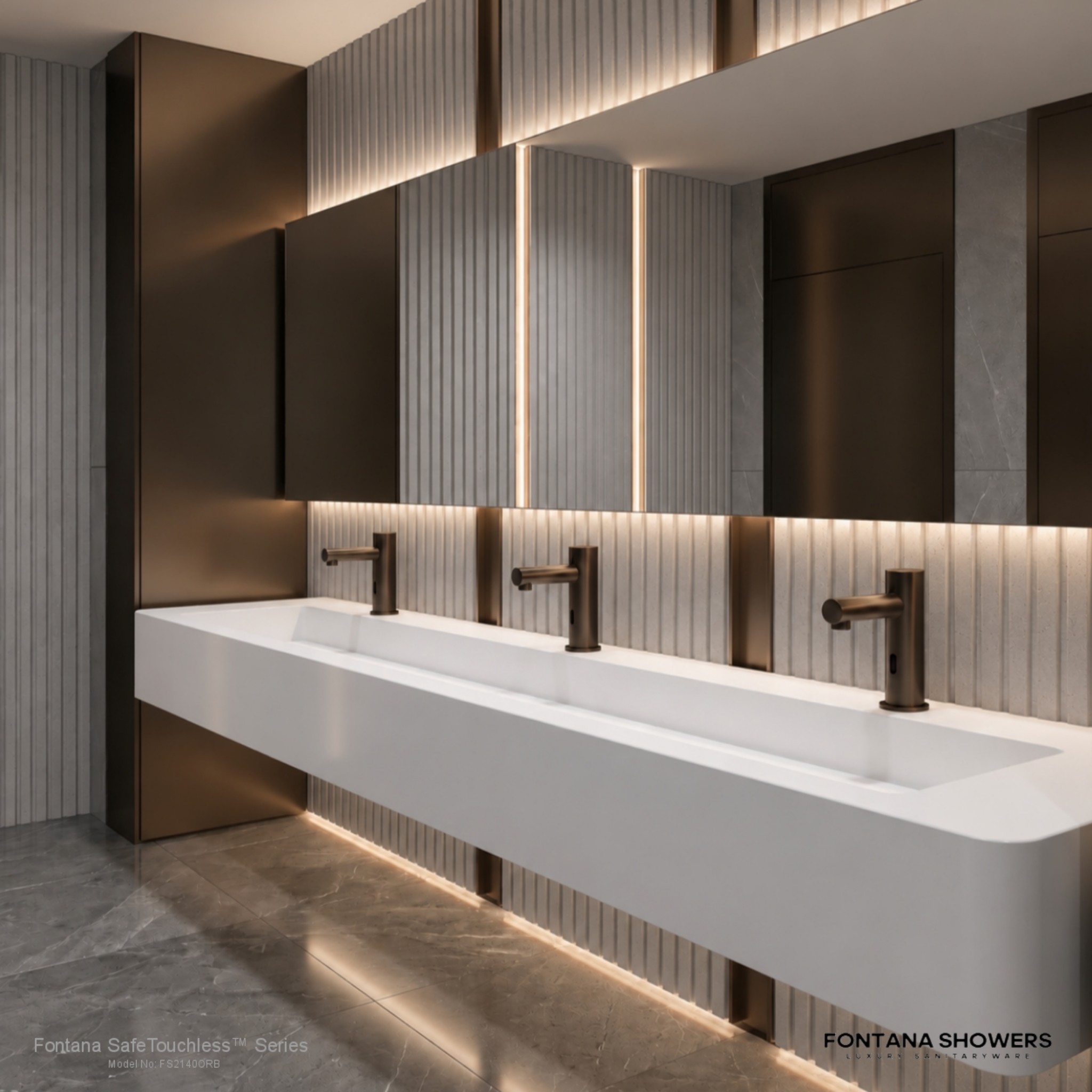
Faucet selection atlas
Six lenses for bathroom sink faucet specification.
Connect faucet selection with mounting, spout geometry, outlet type, sensing, water efficiency, temperature control, accessibility, finish strategy, installation conditions, documentation, and long-term serviceability.
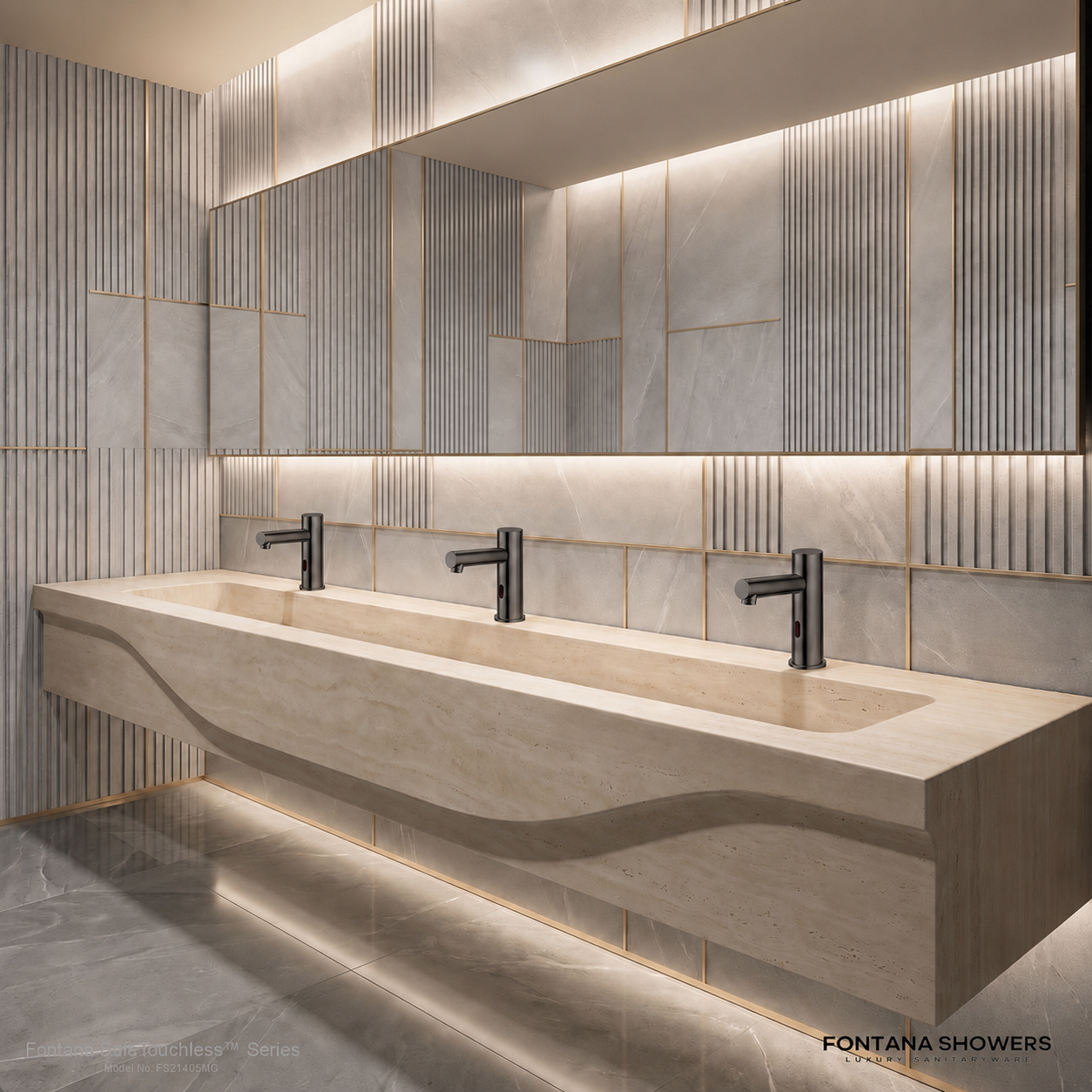
Good performance starts with reach, height, and where water lands in the basin.

Coordinate the faucet finish with the sink, countertop, hardware, and bathroom palette.
Match the outlet type and flow rate to comfort, efficiency, noise, and splash goals.
Faucet, basin, countertop, backsplash, accessories, and surrounding materials should read as one system.

Mounting, supply routing, deck thickness, and service access should be planned before installation.

Coordinate cut sheets, flow data, certifications, mounting details, accessibility notes, and maintenance information.
Bathroom applications
Bathroom settings where faucet choices shape daily experience.
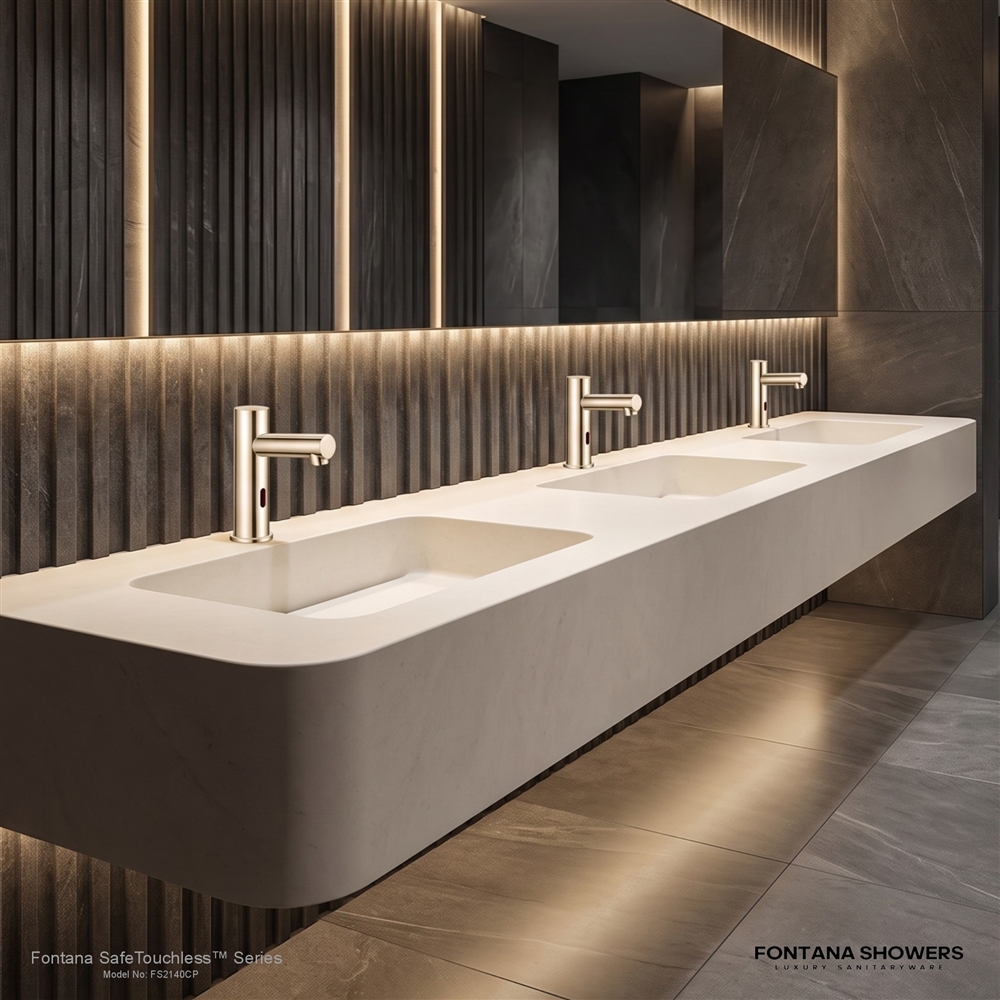
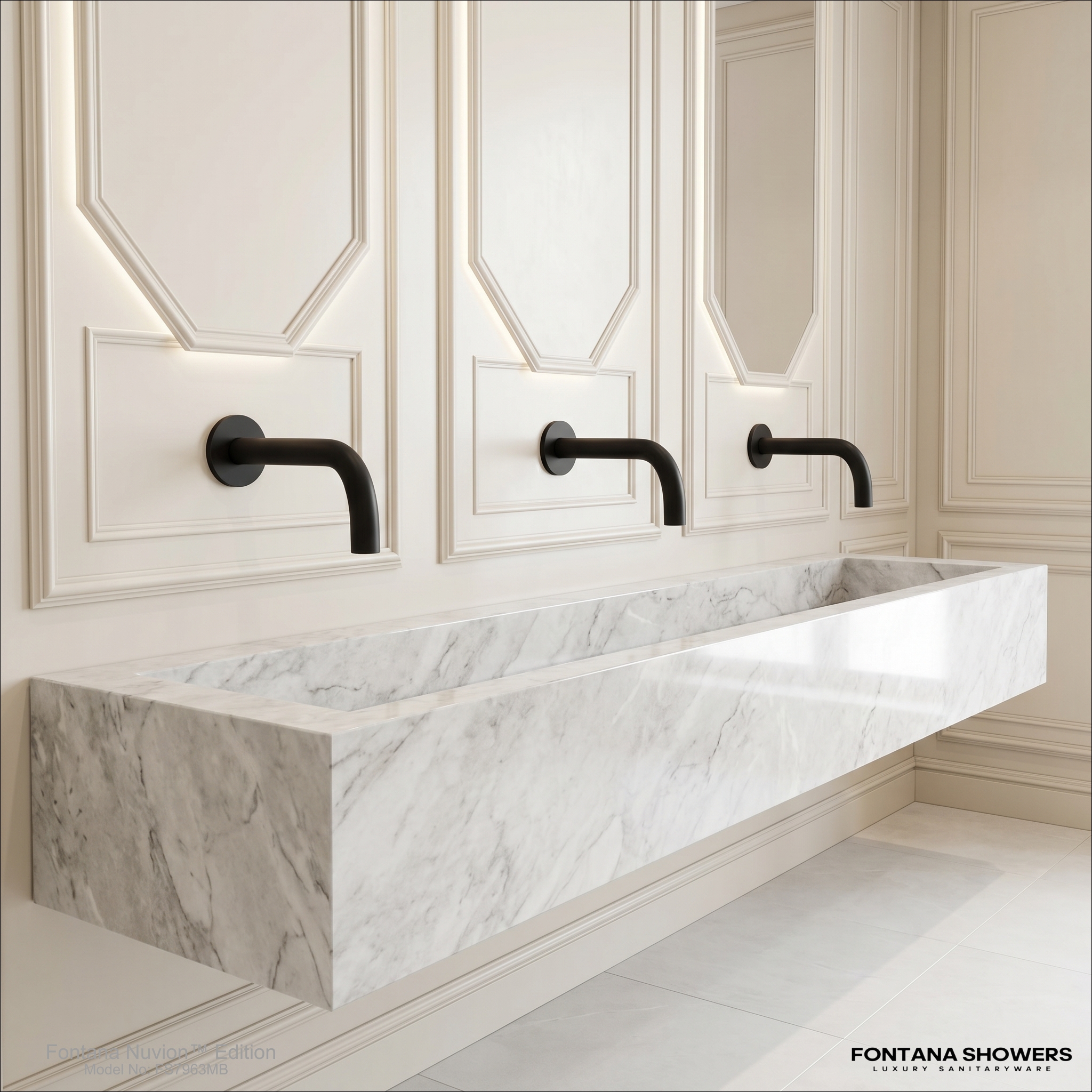
Bathroom type, basin geometry, countertop conditions, user needs, power availability, water pressure, temperature strategy, cleaning procedures, finish expectations, and maintenance access all affect the right faucet choice.




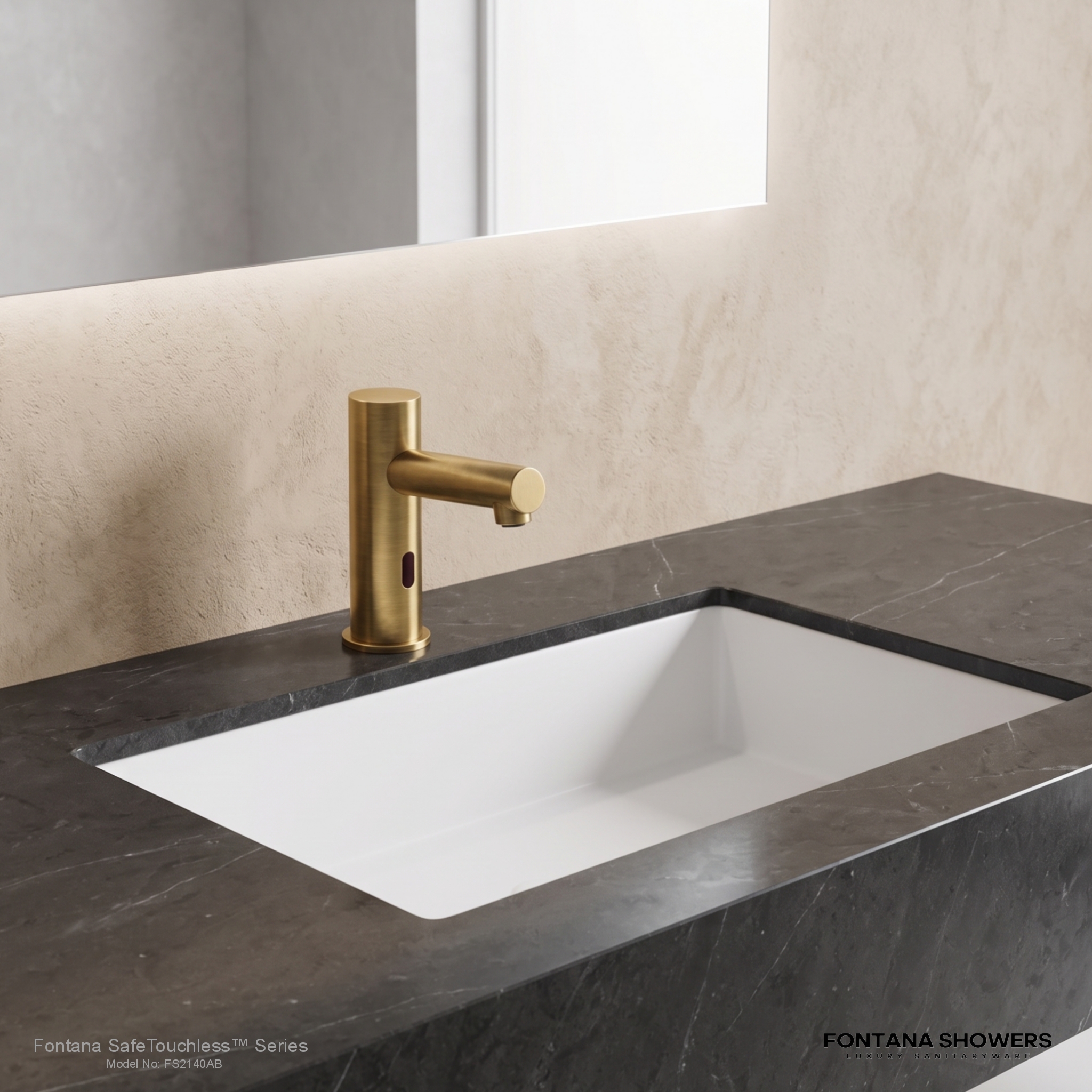

Faucet selection pathways
From spout geometry to smart, efficient bathroom faucets.
Review the performance topics that connect faucet mounting, spout design, outlet type, touchless sensing, flow rate, temperature control, accessibility, installation, finish selection, and long-term maintenance.
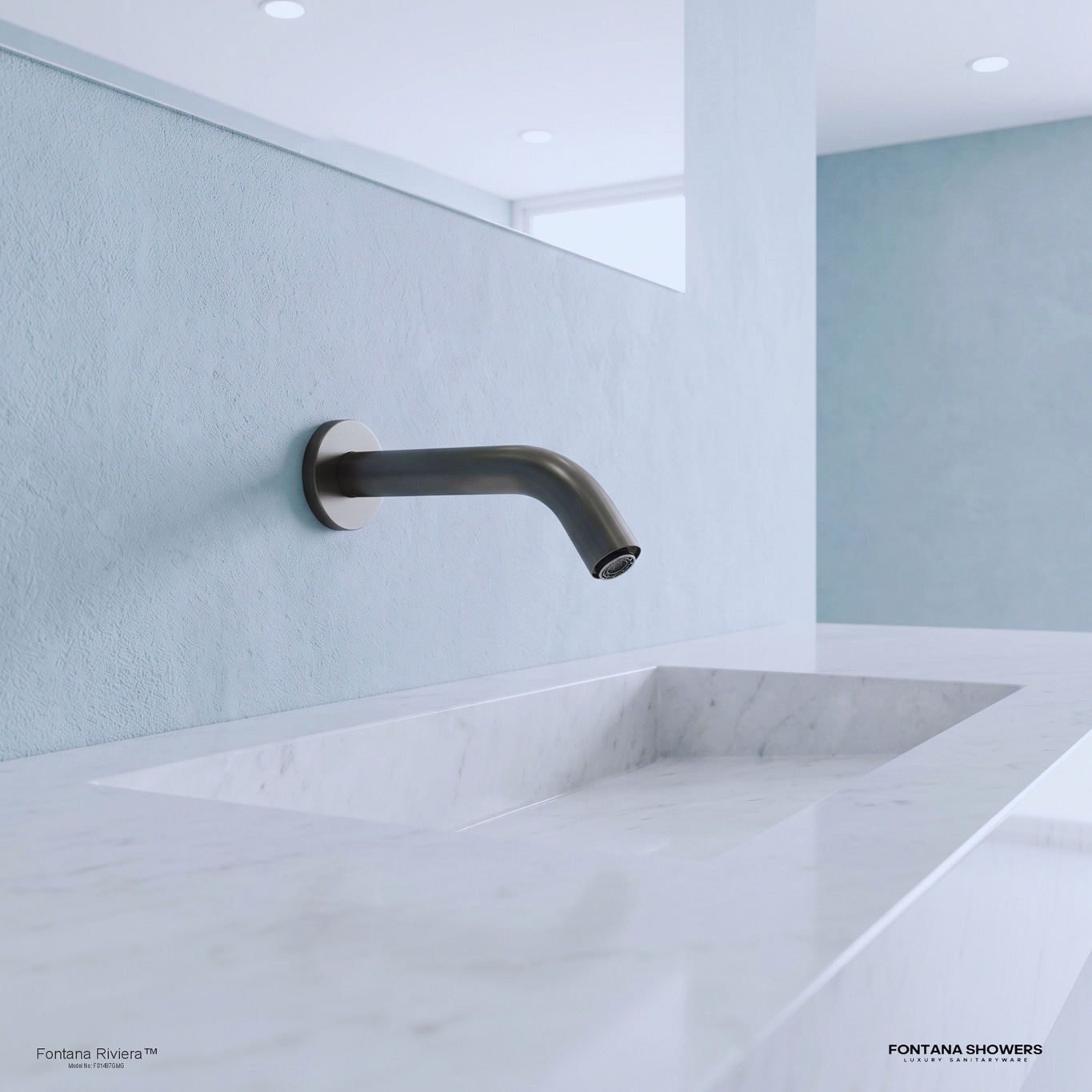
Choose spout style and outlet type as a system.
Review spout reach, height, projection, water landing point, basin depth, outlet type, flow character, splash potential, and visual proportion before the faucet is finalized.
Explore spout + outlet guidance
Compare sensor technologies and activation behavior.
Compare infrared, time-of-flight, and radar approaches along with activation range, reflected surfaces, power strategy, shutoff behavior, maintenance access, and the relationship between sensor position and basin geometry.
Compare faucet sensor technologies
Control water use without compromising usability.
Review faucet flow rate, outlet selection, pressure, aeration, touchless shutoff, user comfort, splash control, and efficiency targets while confirming model-level performance documentation.
Review bathroom faucet benchmarks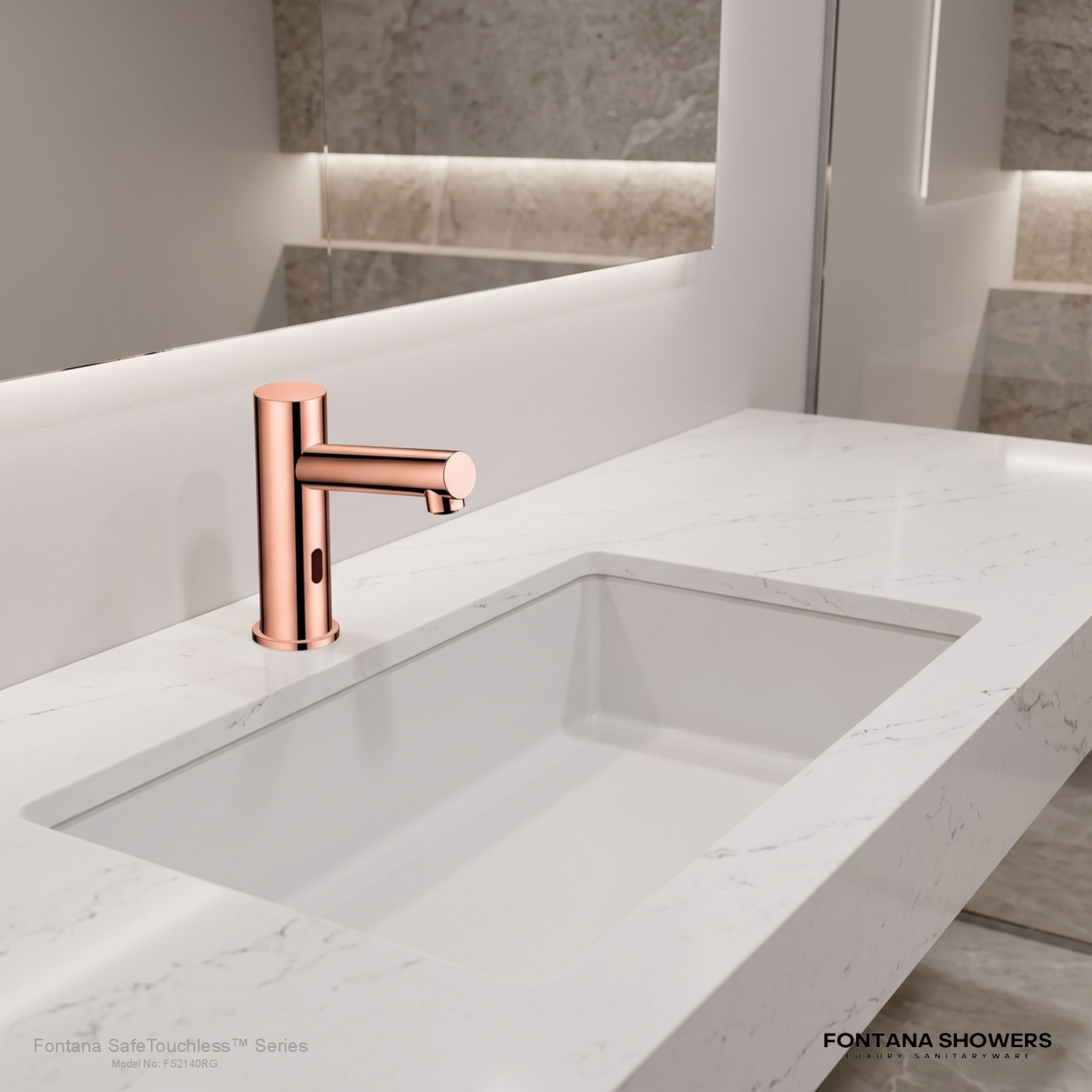
Build a stronger lavatory faucet compliance checklist.
Coordinate flow data, plumbing standards, low-lead requirements, accessibility, temperature-control strategy, mounting conditions, listings, and model-level documentation before approval.
Review lavatory faucet standards
Plan accessible bathroom sink faucet stations.
Coordinate operability or hands-free activation, reach, clear floor space, knee clearance, protected piping, sink depth, temperature strategy, and accessory placement as one accessible user experience.
Explore AEC faucet resources
Coordinate mixing and anti-scald protection.
Review hot and cold supply strategy, point-of-use mixing, thermostatic control, temperature limits, pressure variation, cartridge behavior, touchless pre-mixing, and commissioning expectations.
Explore thermal mixing guidance
Evaluate connected faucet features with purpose.
Review touchless activation, advanced sensing, temperature presets, water-use analytics, leak detection, connectivity, maintenance alerts, and service implications before treating smart features as project requirements.
Explore smart bathroom trends
Compare faucet types, brands, and specification approaches.
Compare deck-mount and wall-mount configurations, manual and touchless controls, flow rates, finishes, tempering options, documentation, service access, replacement parts, and project-specific constraints.
Compare bathroom faucet brandsSpecification framework
Turn faucet data into a coordinated sink strategy.
Connect faucet performance with basin geometry, mounting conditions, flow, temperature control, accessibility, power where required, finish care, replacement parts, and the owner’s maintenance model.
Selection Criteria
Compare mounting type, hole configuration, spout reach and height, handle or sensor method, flow characteristics, finish, basin compatibility, temperature control, and documentation before finalizing the faucet schedule.
Installation Coordination
Check sink and countertop conditions, mounting-hole pattern, maximum deck thickness, wall backing where needed, supply routing, drain relationship, mixing requirements, electrical routing for touchless models, and service access before installation.
Performance Review
Confirm flow delivery, water landing point, splash behavior, outlet character, temperature stability, handle operation or sensor response, automatic shutoff where applicable, and user comfort at turnover.
Maintenance Planning
Document aerators, cartridges, seals, supply connections, batteries, power supplies, sensors, solenoids, approved cleaning methods, finish care, replacement parts, and access paths for efficient long-term ownership.
Faucet field studies
Study spout geometry, flow, sensing, temperature, materials, and serviceability.
Select a faucet-study topic to promote it to the main stage. Use the visual index to review the performance issues that matter from design development through installation and maintenance.
Spout reach and basin alignment in real bathroom sink conditions
Field notes
Real faucet questions, organized by bathroom context.
Field observations focus on basin geometry, faucet mounting, flow and splash behavior, user comfort, water conditions, temperature control, cleaning procedures, finish durability, sensor behavior where applicable, and service access.
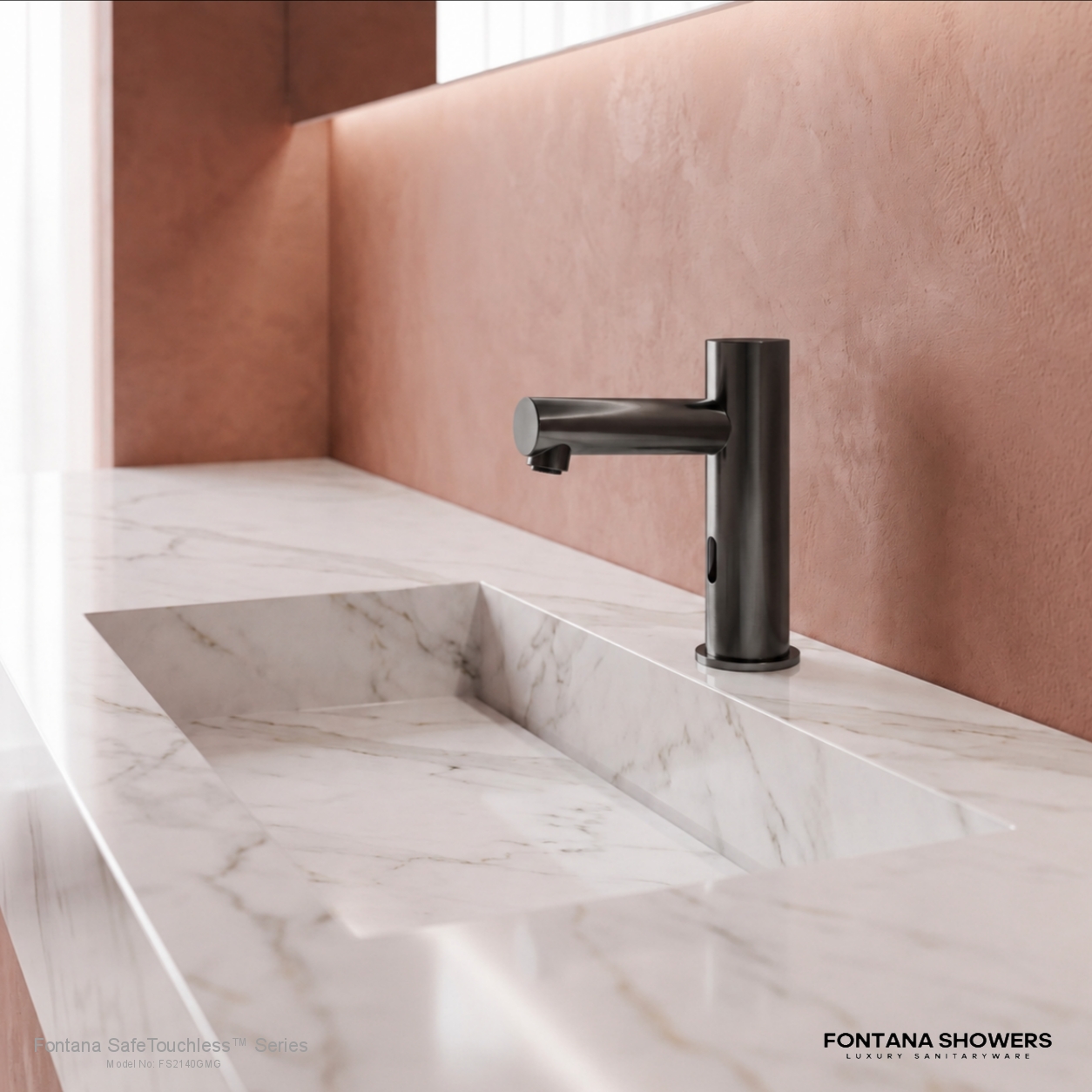
Everyday comfort depends on faucet proportion, flow, and temperature stability.
Residential and multifamily bathrooms benefit from faucet choices that match basin size, countertop conditions, handle or sensor preferences, water pressure, cleaning needs, finish expectations, and easy access to serviceable parts.
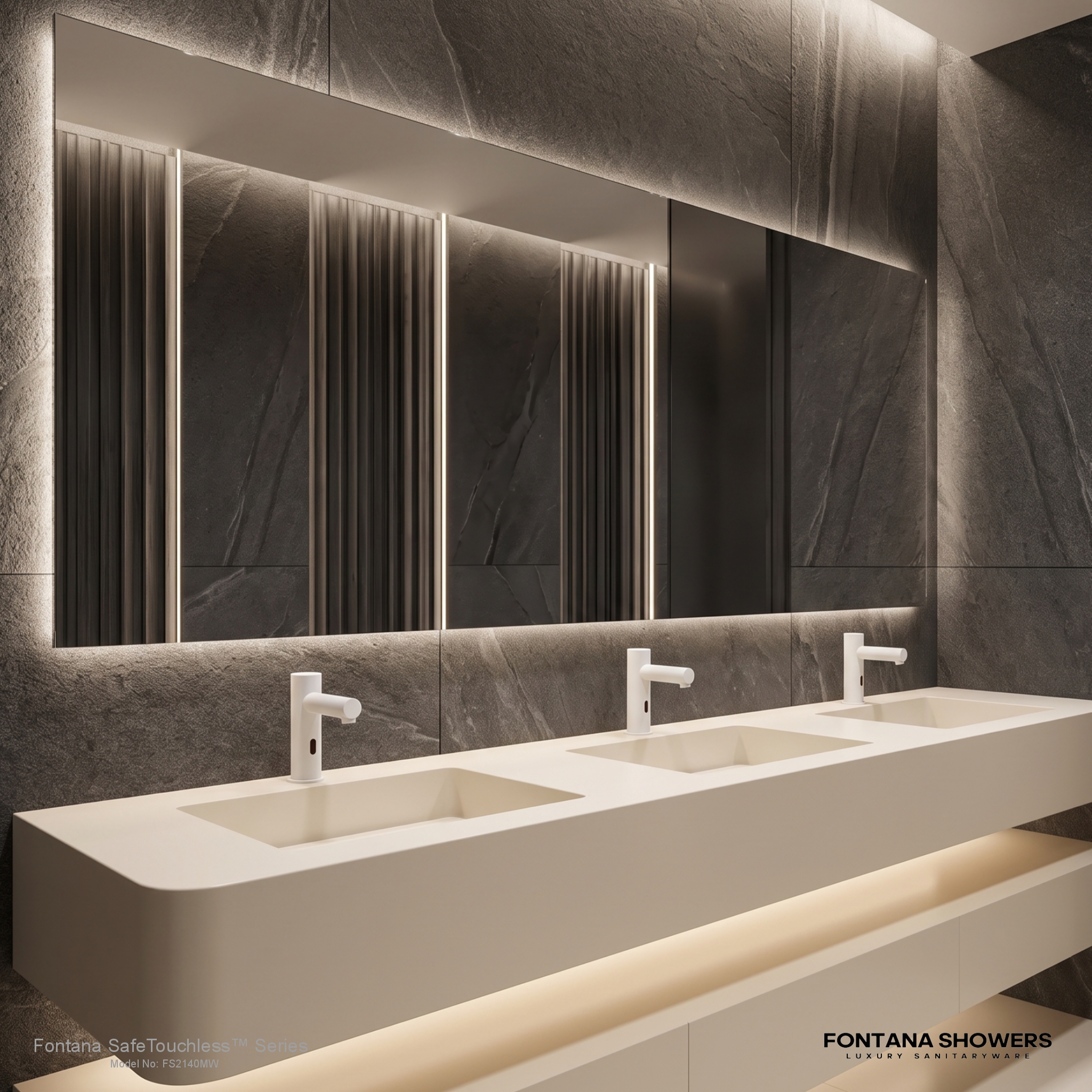
Touch-free use should support cleanability, safe temperatures, and dependable response.
Healthcare planning should connect hands-free operation with cleanability, temperature control, water-management routines, power continuity, service access, accessibility, and commissioning.

Design consistency should be matched by comfort and long-term maintainability.
Hospitality and workplace teams often balance finish consistency, basin proportion, intuitive operation, water efficiency, quiet visual integration, cleaning access, spare parts, and long-term presentation.
Bathroom sink faucet research for selection, specification, renovation, and maintenance.
Explore guidance on faucet styles, mounting types, spout geometry, outlet selection, touchless technology, flow performance, water efficiency, temperature control, accessibility, installation, standards, finishes, and long-term serviceability.
Spout, Flow & Control
Spout geometry, outlet type, water landing point, pressure, flow, sensor or handle operation, temperature, and splash control.
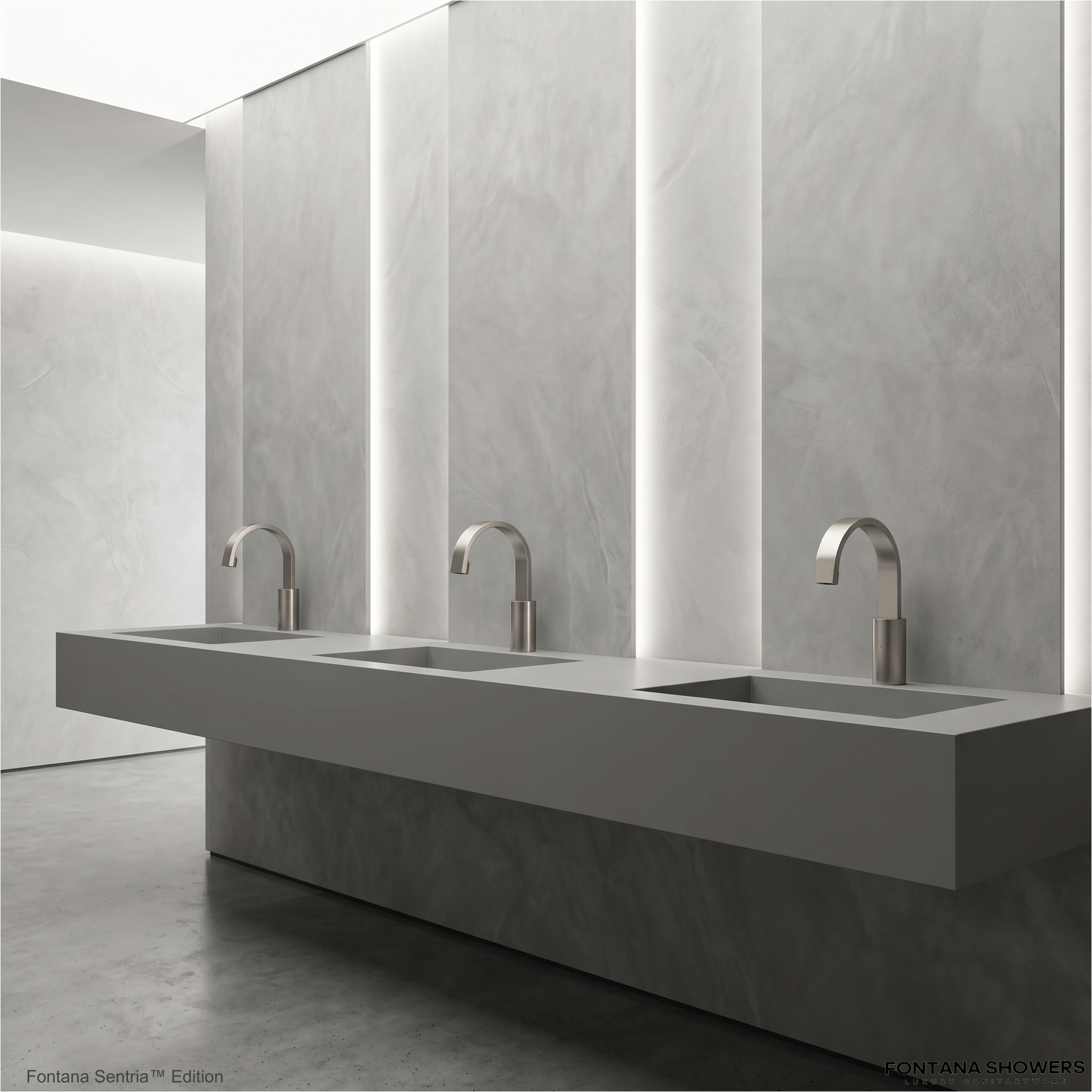
Residential + Commercial Bathrooms
Homes, multifamily, hospitality, healthcare, workplaces, education, retail, civic facilities, and other bathroom environments.

Bathroom sink faucet FAQ
Related questions about selecting and specifying bathroom sink faucets.
These answers focus on the practical relationships between faucet type, basin geometry, water delivery, sensing, accessibility, installation, documentation, and long-term maintenance.
What should I look for when choosing a bathroom sink faucet?
Start with mounting type, hole configuration, spout reach and height, basin geometry, outlet type, flow rate, temperature control, finish, installation access, and replacement-part availability. The faucet should be evaluated with the sink rather than as a separate object. For a deeper geometry review, see the spout style and outlet type guide.
How do I choose the correct spout reach for a bathroom sink?
Coordinate the spout outlet with the basin’s usable bowl area and intended water landing point. Reach that is too short can direct water toward the rear deck, while excessive projection can create awkward hand clearance or splash. Review the sink dimensions, faucet mounting location, backsplash, and user reach together.
Are touchless bathroom faucets suitable for high-traffic restrooms?
They can be appropriate when sensing, power continuity, shutoff behavior, basin geometry, maintenance access, and cleaning procedures are coordinated for the application. Compare the sensing method and installation conditions using the sensor technology comparison.
What flow rate should a bathroom sink faucet use?
The appropriate flow depends on the project type, local requirements, user expectations, pressure conditions, outlet design, and efficiency targets. Confirm the selected model’s published flow data and applicable project requirements rather than relying on a generic value alone.
What is the difference between deck-mount and wall-mount bathroom faucets?
Deck-mount faucets attach through the sink or countertop, while wall-mount faucets require coordinated in-wall rough-in, backing, finished-wall depth, and spout projection. Wall-mount selection should be resolved early because the faucet outlet must align accurately with the final basin position.
What documentation should be reviewed before specifying a lavatory faucet?
Review the product cut sheet, dimensions, mounting requirements, flow information, supply connections, temperature-control strategy, applicable listings or certifications, accessibility coordination, finish care, parts information, and service requirements. The lavatory faucet standards guide expands this checklist.
How should temperature control be coordinated for a bathroom sink faucet?
Confirm the hot and cold supply arrangement, mixing method, target temperature, pressure conditions, fixture controls, and commissioning procedure. Touchless systems may use pre-mixed or thermostatically controlled water depending on the design. See the thermal mixing and anti-scald guide for related coordination topics.
How can bathroom faucet maintenance be simplified?
Plan accessible shutoffs and service points, document cartridges, aerators, seals, sensors, solenoids, batteries or power supplies where applicable, and use finish-compatible cleaning procedures. Keeping product documentation and replacement-part information with facility records can reduce troubleshooting time.
Project & research inquiry
Bathroom
Sink
Faucet.
Bathroom Faucet Research & Reference Hub
Request published documentation, share installation or field observations, suggest research topics, or identify reference material for a residential, hospitality, commercial, or institutional bathroom faucet project.