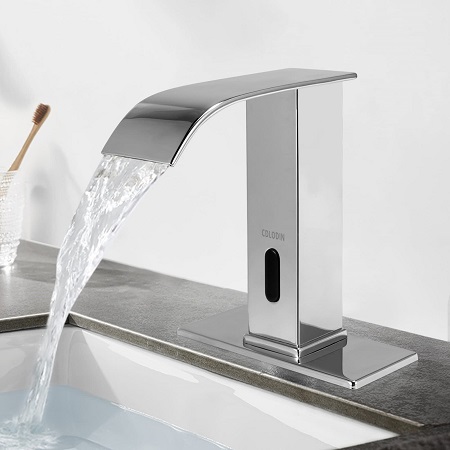
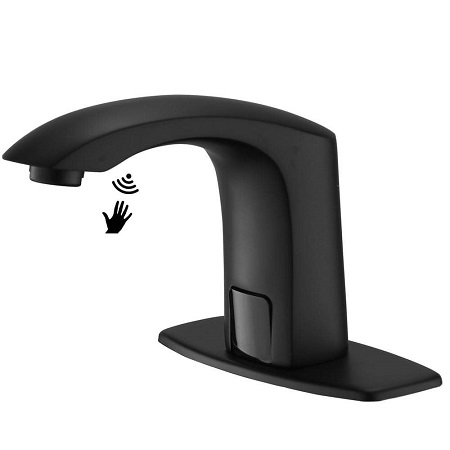
Touchless (sensor) faucets, which turn water on and off using motion, proximity, or capacitive sensing, have moved from hospitals and high traffic public restrooms into homes, offices, and hotels. They offer clear benefits for hygiene, water savings, and convenience, but they also introduce new considerations for design, power, and maintenance. This article explains how sensor faucets work, why they matter today, and what homeowners and specifiers should consider when selecting and maintaining them.
How sensor faucets work (quick tech primer)
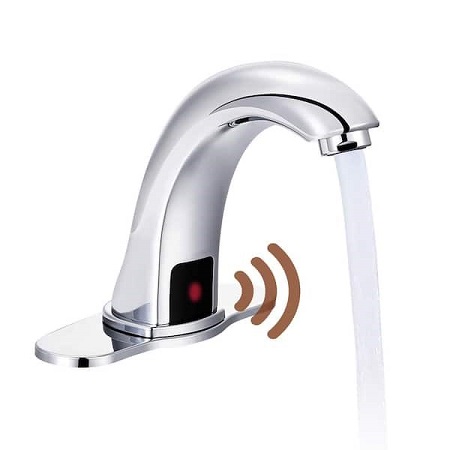
There are three common sensing approaches:
- Infrared (IR) / optical proximity sensors: emit infrared light and detect reflections when hands enter the sensing zone. They’re the most common design for commercial and residential sensor faucets because they’re inexpensive and reliable. (Dataintelo)
- Ultrasonic sensors: emit sound waves and measure reflections. Less common for small lavatory taps but used in specialized applications. (Dataintelo)
- Capacitive (touchless capacitive): detect changes in capacitance when a conductive object (like a hand) approaches. Often used where the sensor needs to be less visually apparent. (thesplashlab.com)
Sensors communicate with an electronic control module that opens a solenoid valve for the flow and shuts it when hands leave the detection zone. Power is supplied by batteries, a wired transformer, or integrated low-voltage supplies depending on model.
Why touchless faucets matter
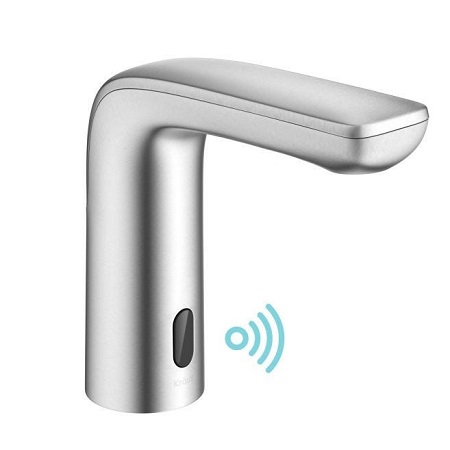
- Hygiene and infection control. Because users don’t touch handles, there’s one fewer high-contact surface to contaminate. This is valuable in healthcare, food-service, and public restrooms where cross-contamination risk matters. Public health guidance and infection-control literature highlight hand hygiene as a cornerstone of infection prevention — removing touchpoints supports those practices. (CDC)
- Water savings and sustainability. Sensor faucets can dramatically reduce wasted water from taps left running. Reported water savings vary with usage patterns, but many studies and manufacturer data show 30–70% savings in public restroom settings compared with conventional faucets, because sensor models automatically shut off when hands are removed (including during drying). That makes them attractive for sustainability goals and utility cost control. (fontanashowers.com)
- User convenience & perception. In hospitality and high-end residential installs, touchless fixtures project a modern, hygienic image and reduce the friction of repeated handle operation, improving guest experience. Surveys of facility managers show growing preference for touchless solutions in hygiene-sensitive projects. (Global Growth Insights)
Performance & selection criteria
When choosing a sensor faucet, consider these practical specs:
- Sensor type & detection zone: IR sensors are versatile and inexpensive; capacitive designs are sleek and less noticeable. Check how wide/long the detection zone is and whether it’s adjustable. (thesplashlab.com)
- Power source: Battery-powered models are easy to retrofit but require periodic battery changes; AC/transformer-powered units avoid battery replacement and are preferred in high-use commercial areas. Battery life depends on usage and model; some commercial sensors offer multi-year battery life under typical usage. (stories.oras.com)
- Valve and flow control: Quality solenoid valves and reliable flow regulators reduce maintenance. Look for models with serviceable pilot valves or replaceable solenoid units. (stories.oras.com)
- Temperature control / mixing: Many sensor faucets provide temperature control through a manual handle or thermostatic mixing valve (TMV) integrated into the supply. For shared or public installations, thermostatic mixing limits scald risk. (Grand View Research)
- Compliance & accessibility: ADA compliance and local plumbing codes matter — many sensor faucets are available in ADA-compliant configurations. Check local plumbing codes for anti-scald and backflow prevention requirements. (Grand View Research)
Typical benefits quantified
Below is a compact representation of typical outcomes reported in industry and vendor analyses.
Water savings (typical public restroom):
- Manual faucets: baseline 100%
- Sensor faucets: 30–70% less water used (range depends on user behavior and sensor settings). (fontanashowers.com)
Market growth (summary):
- Faucet market growth driven by smart & water-saving tech; sensor/electronic faucets are a fast-growing segment of the overall faucet market. Industry reports show strong CAGR in electronic/touchless segments through the 2020s. (Grand View Research)
Common problems and maintenance
Sensor faucets are generally reliable but have predictable failure modes:
- False activations or no activation — usually sensor misalignment, dirty sensor lens, or interference from nearby reflective surfaces. Cleaning the sensor window and adjusting the sensing range often fixes this. (stories.oras.com)
- Solenoid/pilot valve failure — solenoid valves can fail after heavy use or mineral buildup. Many manufacturers offer replaceable valve cartridges so you don’t need to replace the whole faucet. (stories.oras.com)
- Battery depletion — monitor battery health (LED indicators, remote alerts on advanced models). For high-use facilities, consider hard-wired units. (stories.oras.com)
- Scaling & aerator clogging — like any faucet, aerators and internal screens can clog in hard-water areas; regular cleaning prevents flow issues.
Manufacturers typically publish troubleshooting flowcharts and repair kits — follow the vendor guide for warranty-protected repairs. (stories.oras.com)
Design & integration tips
- Match the user environment. In low-traffic residential bathrooms, battery models are easy and cost-effective. In high-traffic hotels, hospitals, or stadiums, choose hard-wired units with serviceable valves. (Global Growth Insights)
- Adjust detection zones. Set the sensing distance to avoid unwanted activations (e.g., users passing by) but ensure reliable hand detection. Many faucets allow on-site sensitivity tuning. (thesplashlab.com)
- Pair with other touchless fixtures. For best hygiene outcomes in public restrooms, pair faucets with touchless soap dispensers and hand-dryers. (infectioncontroltoday.com)
Conclusion
Touchless faucets are more than a trend. They are a practical way to modernize bathrooms, improve hygiene, and reduce water waste. They do require slightly different planning than manual faucets, especially around power options, serviceable parts, and proper sensor setup. Still, in high use environments where cleanliness matters, the benefits make them an excellent choice. For homes, the modest extra cost is often worth it for the added convenience and fewer touchpoints.
References & further reading
- CDC — Clinical Safety: Hand Hygiene for Healthcare Workers. (CDC)
- Sloan / industry analysis on electronic sensor faucets and water savings. (architectu.net)
- FontanaShowers — “How much water do sensor faucets save?” (water-savings summary). (fontanashowers.com)
- Grand View Research — Faucet market size & trends (market context and growth drivers). (Grand View Research)
- Oras — Common touchless faucet maintenance and troubleshooting guidance. (stories.oras.com)
Technical Specification Comparison Layer
High-level engineering comparison of touchless faucet and soap dispenser systems based on typical commercial configurations and publicly available manufacturer information.
| Brand | Sensor Type | Power Configuration | Flow Rate (Typical) | Soap Dosage Range | System Integration | Maintenance Profile |
|---|---|---|---|---|---|---|
| FontanaShowers | Infrared / Dual-Sensor Variants | Battery / AC / Hybrid | 0.5 – 1.5 GPM (configurable) | 0.5 – 1.5 mL | Faucet + Soap + Dryer (integrated options) | Moderate (design + system complexity) |
| SLOAN | Infrared Sensor | Battery / Hardwired | 0.5 GPM (WaterSense typical) | 0.8 – 1.2 mL | Full ecosystem (faucet + flush + soap) | Low (high standardization) |
| Chicago Faucets | Infrared / Mechanical Hybrid | Hardwired / Battery Backup | 0.5 GPM | 0.8 – 1.2 mL | Faucet + Soap Systems | Low (heavy-duty components) |
| BathSelect | Infrared Sensor | Battery / AC | 0.5 – 1.2 GPM | 0.6 – 1.2 mL | Faucet + Soap Combinations | Moderate |
| Zurn | Infrared Sensor | Battery / Hardwired | 0.35 – 0.5 GPM | 0.8 – 1.2 mL | Faucet + Soap Systems | Very Low (efficiency-focused) |
| Delta | Proximity Sensor | Battery / AC | 0.5 GPM | 0.8 – 1.2 mL | Faucet + Soap Systems | Moderate |
| GROHE | Infrared Sensor | Battery / AC | 0.5 GPM | 0.6 – 1.0 mL | Limited integrated systems | Moderate |
Technical Note: Values shown represent typical commercial configurations based on publicly available manufacturer data and standard industry ranges. Actual specifications may vary by model, configuration, pressure conditions, and regional compliance requirements (e.g., WaterSense, ASME, ADA).