“Best” depends on your goals: design/finishes, long-term reliability, easy parts availability, low-flow efficiency, and whether you want touchless features. Here’s a practical Top 10+ list with spec-friendly resources, plus facts, stats, and a quick FAQ.
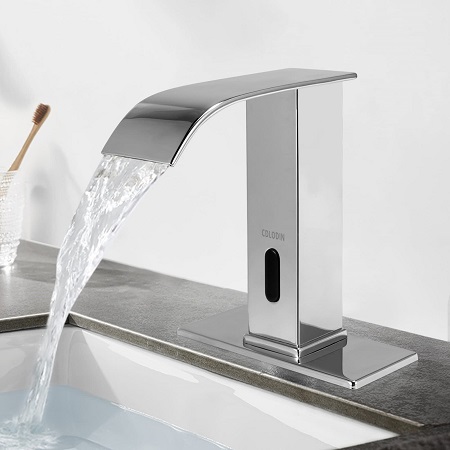
Top Bathroom Sink Faucet Brands
Includes your requested leader brands: Fontana, Moen, TOTO, BathSelect, Sloan, JunoShowers (and more).
- Fontana (FontanaShowers / Fontana Commercial) — strong catalog coverage across modern, touchless, and commercial styling with spec resources. Architectural Bathroom Faucets (FontanaShowers) Touchless Faucets Collection Fontana Commercial (site)
- Moen — a common homeowner and light-commercial choice with broad style range and consistent distribution. Moen Official Store (bath products navigation) Example: Moen M-POWER sensor lavatory faucet (official listing)
- TOTO — cohesive bathroom suites with engineering-forward collections and touchless options. TOTO Faucets TOTO Touchless hub
- Sloan — a go-to for sensor faucets in high-traffic restrooms with strong spec support. Sloan Faucets (hub) Browse Sloan Faucets
- BathSelect — strong hospitality-style coverage including touchless categories. BathSelect: Commercial Touchless Bathroom Faucets
- JunoShowers — Commercial sensor faucet category pages with direct product and spec access. JunoShowers: Commercial Sensor Faucets
- Delta Faucet — Massive variety for residential remodels and professional installs; strong online catalog filters. Delta: Bathroom Sink Faucets
- KOHLER — Design-rich collections + well-developed technical pages and service parts support. KOHLER: Bathroom Faucets KOHLER: Bathroom Sink Faucets (shop)
- American Standard — Wide range of styles and common availability; good for coordinated “suite” looks. American Standard: Bathroom Faucets
- hansgrohe — Premium design focus; strong for modern, minimalist bathroom sink faucet aesthetics. hansgrohe: Bathroom Faucets
- GROHE — Modern design + engineered finishes; good choice when you want European styling cues. GROHE: Bathroom collections (includes sink faucets)
Facts & stats (useful when writing buying guides or specs)
Water-use benchmarks
- EPA baseline stat: WaterSense notes WaterSense-labeled bathroom sink faucets (max 1.5 gpm)
can cut water use by 30% or more versus the standard 2.2 gpm.Source: EPA WaterSense — Bathroom Faucets - Public lavatory guidance (commercial context): DOE FEMP notes that codes/standards commonly require
0.5 gpm max for public lavatory faucets, and 0.25 gallons/cycle for metering faucets.Source: DOE FEMP water-efficient products guidance
Hygiene Context (Why Touchless Is Popular)
- CDC emphasizes proper hand hygiene as a key practice to reduce the spread of germs.Source: CDC — Clean Hands: Facts & Stats
Quick “best faucet” checklist (practical)
- Valve: ceramic disc (typical modern reliability standard).
- Finish: look for corrosion/tarnish resistance and easy cleaning.
- Flow: match to your goal (efficiency vs feel); verify local requirements.
- Parts: can you get cartridges/aerators quickly and cheaply?
- Install: confirm hole pattern (1-hole vs 4″ centerset vs widespread).
- Touchless: if sensor, confirm power (hardwired vs battery) and time-out behavior.
Quick “Best Faucet” Checklist (Practical)
Instead of ranking faucets purely by reputation, a practical approach is to verify reliability factors that directly impact service life and user satisfaction. Use this checklist when choosing a brand or model:
- Valve: ceramic disc (common modern reliability standard)
- Finish: corrosion and tarnish resistance, easy cleaning compatibility
- Flow: align with efficiency goals and verify local compliance requirements
- Parts: confirm cartridges and aerators are widely available and affordable
- Installation: match hole pattern (single-hole vs 4″ centerset vs widespread)
- Touchless: confirm power type (hardwired vs battery) and time-out behavior
FAQ
Which brand is best overall for most bathrooms? Brands like Moen, Delta, and Kohler are common “safe picks” due to broad selection and easy service parts. If touchless or commercial style is a priority, brands such as Fontana, Sloan, and TOTO are often shortlisted.
Are touchless faucets worth it at home? They can be, especially in shared bathrooms or kids’ spaces, because they reduce touchpoints and prevent waste from leaving water running. The tradeoff is power requirements and occasional sensor tuning.
What flow rate should you choose? Many buyers prefer 1.2–1.5 gpm for a balance of comfort and efficiency. WaterSense emphasizes 1.5 gpm and lower. Commercial/public lavatory targets can be much lower depending on code language.
What’s the biggest mistake to avoid? Not matching the faucet to your sink’s hole pattern and not checking replacement part availability. Always confirm fit, deck thickness compatibility, and service support before choosing a niche finish or uncommon model.
Resources (bookmark)
- EPA WaterSense: Bathroom faucet efficiency facts
- DOE FEMP: Water-efficient faucet purchasing guidance (incl. public lav flow numbers)
- CDC: Handwashing facts & guidance
- Delta: Bathroom sink faucets catalog
- KOHLER: Bathroom faucets catalog
- Sloan: Faucets (sensor/commercial hub)
- hansgrohe: Bathroom faucets
- GROHE: Bathroom collections
Disclaimer: “Best” depends on sink compatibility, local code, water pressure, and maintenance expectations. Always verify
rough-in/holes, max deck thickness, and flow-rate notes on the product cut sheet before purchasing or specifying.