The most important attributes of a modern bathroom sink faucet are thermal mixing and anti-scald protection, especially where used in residential, multifamily and light commercial environments. Although these systems are usually invisible to the final users, they are at the centre of user safety, code compliance, comfort and durability of plumbing operation. To architects, engineers, and plumbing designers, the study of the operation of these mechanisms is necessary when selecting bathroom sink faucets as a component of an integrated system that supplies water.
Water temperatures above 120°F can cause serious burns in seconds, making anti-scald protection critical in residential plumbing. Thermostatic Mixing Valves (TMVs) automatically regulate hot and cold water to maintain consistent, safe outlet temperatures, meeting ASSE plumbing standards and significantly reducing the risk of household scald injuries.

Why Thermal Mixing and Anti-Scald Protection Matter
Hot water systems are constructed to hold water at high temperatures that prevent bacterial growth and supply water on fixtures in safe and usable temperatures. This temperature difference has a scalding hazard at bathroom sink faucets, unless it is controlled by thermal means.
- Protecting users from sudden temperature spikes
- Maintaining consistent outlet temperatures during pressure fluctuations
- Balancing hygiene requirements with occupant safety
- Meeting plumbing code and public health standards
- Supporting long-term system reliability
Fundamentals of Thermal Mixing
Thermal mixing is a process of mixing hot and cold water to provide a regulated temperature at the faucet out warning. This operation would be possible at various stages of the plumbing system as per design policy.
Common Mixing Locations
Typical thermal mixing approaches include:
- Central mixing valves serving multiple fixtures
- Point-of-use mixing within individual faucets
- Integrated cartridge-based temperature control
For sink applications in bathrooms, mixing through heating typically takes place with components like faucet cartridges or internal mixing chambers at POU.

Common Types of Anti-Scald Mechanisms
Anti-scald protection is a design attribute which restricts the highest outlet temperature or is responsive to variations in supply pressure or temperature.
Pressure-Balancing Devices
The purpose of the pressure balancers is to ensure a steady ratio of hot to cold water when there are variations in pressure in the supply water lines.
Thermostatic Mixing Valves (TMVs)
In thermostatic systems, elements sensitive to temperature are used to continuously adjust the hot and cold mix constantly to keep the outlet temperature at a set temperature.
Mechanical Temperature Limit Stops
Most faucet cartridges have built-in adjustable temperature limit stops to limit the maximum hot water rate of discharge at the faucet.
Anti-Scald Requirements in Plumbing Codes
Plumbing codes cover scald protection by specifying maximum allowable outlet temperature, and using performance requirements on temperature control devices.
- ASSE 1016 and ASSE 1070 standards
- International Plumbing Code (IPC)
- Uniform Plumbing Code (UPC)
Although the risk of scalding is less with the bathroom sink faucets as compared to the showers, anti-scald safeguards are being increasingly demanded in the multifamily and residential settings near the medical facility.
Faucet Cartridge Design and Temperature Stability
The cartridge in the modern bathroom sink faucets is the major element that causes thermal control. The design of the cartridge has direct effects on the response time of temperatures, stability under pressure variations and accuracy over time.
Residential faucet systems illustrating these internal designs can be reviewed at bathroom-sink-faucet.com and FontanaShowers.
Touchless Faucets and Anti-Scald Considerations
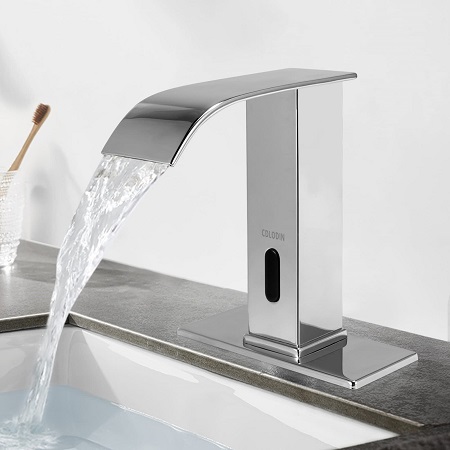
Touchless faucets introduce additional safety considerations because users cannot manually adjust temperature during operation. These systems rely heavily on internal thermal safeguards.
- Pre-mixed water delivery through internal mixing chambers
- Factory-set maximum outlet temperature limits
- Solenoid valves coordinated with thermostatic or pressure-balancing elements
Touchless faucet categories with integrated temperature control can be reviewed at FontanaShowers Commercial Sensor Faucets. General technical background on automatic faucet operation is available at Automatic Faucet.
System-Level Coordination for Anti-Scald Safety
Anti-scald protection is most influencing when addressed as a coordinated system. The Designers must need to inline fluid heater temperatures, central mixing valves, fixture-level controls, and recirculation systems to stabilize the delivery.
Material Selection and Reliability of Thermal Components
Thermal mixing components need to perform consistently over long service lives. Material selection affects resistance to thermal cycling, mineral buildup, and fluctuating pressures.
- Lead-free brass bodies
- Durable seals and precision-machined components
- Stability under varying water chemistries
Material & compliance documentation all are available on FontanaShowers Faucets Materials and Compliance.
Comparing Faucet Categories for Safety Performance
The review of various faucet categories can assist the specifiers to evaluate how different kinds of designing approaches the thermal control and scald prevention.
The related resources consist of bathroom-sink-faucet.com, FontanaShowers, Commercial Sensor Faucets, BathSelect, and JunoShowers.
Conclusion
Heat mixing and scald protection is a basic consideration for proper bathroom sink faucetry design or functionality. An understanding of the interrelationship between mixing valves, cartridges, and heat mixing systems enables each AEC professional to properly select and specify fixtures to meet the demand for hygienic, safety-controlled temperatures.
Approaching anti-scald protection as a coordinated system rather than a singular component aligning with the key mission of bathroom-sink-faucet.com: hat provides technically grounded guidance for performance driven plumbing design construction related decisions.
References
- ASSE 1016 / ASSE 1070 – Temperature Control Devices
- International Plumbing Code (IPC)
- Uniform Plumbing Code (UPC)