
Maintenance-Friendly Touchless Fixtures for Facility Management Teams
In high-traffic public facilities, touchless fixtures should be evaluated not only by appearance, sensing technology, or water efficiency, but also by how efficiently facility personnel can inspect, isolate, clean, troubleshoot, service, and return individual fixtures to operation.
Stadiums, arenas, theaters, universities, hospitals, airports, transportation terminals, convention centers, and other heavily occupied buildings may contain dozens or hundreds of faucets distributed across multiple restroom banks. At that scale, relatively small improvements in maintenance access can translate into substantial reductions in labor requirements and fixture downtime.
Accessible solenoids, power supplies, shutoff points, filters, strainers, batteries, wiring, control modules, and replacement components allow technicians to perform routine work without unnecessarily removing counters, mirrors, millwork, or surrounding architectural finishes. The objective is not simply to install a hands-free faucet. It is to create a restroom system that remains practical to operate throughout its service life.

Why Maintenance Access Matters in High-Traffic Restrooms
Restroom fixture downtime often begins with a relatively small service requirement. A battery may need replacement. An aerator may become restricted. A filter can collect debris. A sensor may require inspection. A valve connection might need attention. None of those procedures is necessarily difficult when access has been planned correctly.
Service becomes more complicated when equipment is hidden behind fixed millwork, crowded by other piping, concealed without usable access, or installed in a location that requires removal of unrelated components. Every unnecessary step extends the period during which a fixture remains unavailable.
For facility management teams, maintenance should therefore follow a predictable sequence. Personnel should know which component requires inspection, where it is located, how the water and power can be isolated, what replacement component is required, and how operation should be tested before the wash station returns to public service.


What Makes a Touchless Fixture Maintenance-Friendly?
A maintenance-friendly touchless faucet is not defined by one component. Serviceability depends on coordination among the faucet, sensing architecture, water-control assembly, electrical system, basin, counter, millwork, supply piping, shutoffs, and surrounding construction.
Accessible control equipment
Solenoid valves, controllers, wiring connections, mixing components, power modules, and batteries should remain reachable after the restroom is fully finished.
Individual fixture isolation
One faucet requiring service should not unnecessarily disable an entire wash station bank. Fixture-level shutoffs help maintenance personnel isolate only the affected unit.
Standardized fixture families
Consistent faucet families can reduce the number of unique spare parts, batteries, control modules, tools, and maintenance procedures that a facility must manage.
Documented power architecture
Battery-powered, hardwired, and hybrid arrangements have different service requirements. Each system should be clearly identified in the owner’s O&M documentation.
Filter and strainer access
Filters and strainers should be positioned where routine cleaning or inspection does not require removal of major surrounding components.
Searchable documentation
Model information, diagrams, replacement parts, wiring data, and commissioning procedures should be readily accessible to facility personnel.
Standardized Touchless Faucet Families for Facility Planning
Fixture standardization is one of the most useful tools available to facility management teams. A project may require different finishes or architectural profiles across public, premium, hospitality, suite, executive, or institutional restroom zones, but those aesthetic requirements should be balanced against the operational cost of managing too many unrelated fixture platforms.
Using coordinated faucet families can make spare-part planning, technician training, specification documentation, scheduled inspections, and long-term replacement more manageable. The models below provide a visual reference to the touchless faucet configurations supplied for this article. Product requirements, certifications, sensing architecture, power options, flow rates, and service components should be confirmed for the exact model selected for a project.

Antique-brass finish option for coordinated touchless restroom programs.

Chrome configuration suitable for visually standardized commercial restroom banks.

Gun-metal-gray finish for contemporary commercial interiors.

Matte-black finish for modern architectural restroom applications.

Deck-mounted touchless configuration for premium restroom zones.

Rose-gold finish within the coordinated Inkwell Arc family.

Brushed-gold finish for commercial and hospitality applications.

Brushed-nickel option for restrained architectural finish palettes.

Commercial automatic faucet configuration for sensor-operated restroom applications.

Antique-brass variation within a commercial touchless platform.

Brushed-gold commercial faucet for coordinated public restroom design.

Chrome variation suited to standardized high-use restroom banks.

Gold-finish touchless configuration for premium commercial interiors.

Matte-black commercial touchless option for contemporary restroom specifications.

Rose-bronze finish for architecturally differentiated restroom zones.

Satin-gold finish for public, hospitality, and premium restroom applications.

Alternative satin-gold touchless configuration for coordinated design programs.

Satin-rose-gold finish for premium architectural washroom environments.

Gold touchless model for commercial architectural applications.

Brushed-gold model for coordinated public and hospitality restrooms.

Brushed-nickel touchless option within the FS-1094 family.

Matte-black variation supporting coordinated finish schedules.

Brushed-nickel model for commercial restroom fixture schedules.

Rose-bronze option for architecturally differentiated restroom environments.

Chrome touchless model for commercial fixture standardization.
High Fixture Counts Magnify Small Maintenance Inefficiencies
In a small office restroom, several additional minutes spent servicing a faucet may have limited operational effect. In a stadium or arena with dozens of restroom banks, however, the same inefficiency can be repeated hundreds of times over the life of the building.
Large venues also experience highly concentrated demand. Restroom usage can rise sharply immediately before an event, during breaks, at intermission, or after the event ends. A fixture unavailable during one of those windows places additional demand on neighboring wash stations.





Serviceability Criteria to Review Before Fixture Approval
| Component | Maintenance Concern | Preferred Design Approach | Facility Benefit |
|---|---|---|---|
| Sensor | Cleaning, adjustment, troubleshooting or replacement. | Coordinate sensing with basin geometry and keep relevant components accessible. | Reduces avoidable complaints and diagnostic time. |
| Solenoid valve | Water-control troubleshooting or replacement. | Locate within an identifiable and accessible service zone. | Speeds corrective maintenance. |
| Power supply | Battery replacement, transformer inspection or wiring issue. | Use accessible, labeled power components and consistent system architecture. | Creates predictable preventive maintenance. |
| Fixture shutoff | One faucet must be temporarily removed from service. | Provide individual fixture isolation where practical. | Adjacent wash stations remain operational. |
| Aerator / outlet | Mineral deposits, debris or flow inconsistency. | Allow straightforward removal and cleaning. | Supports consistent water delivery. |
| Filter / strainer | Supply-system debris can restrict performance. | Locate where inspection does not require countertop or cabinet removal. | Shortens troubleshooting procedures. |
| Replacement components | Excessive model variety increases inventory complexity. | Standardize fixture families and common parts where appropriate. | Reduces stock requirements and technician training. |
| Documentation | Facility personnel need component information quickly. | Provide searchable O&M manuals, diagrams and part schedules. | Improves maintenance response time. |
Design Around a Repeatable Service Sequence
Efficient service becomes easier when multiple restroom banks follow a consistent operating logic. Technicians should not need to rediscover component locations and isolation procedures every time a work order is opened.
Identify
Record fixture model, restroom zone, power source, installation date, valve configuration, and replacement information.
Isolate
Provide accessible water and electrical isolation so one station can be serviced without disabling surrounding fixtures.
Access
Maintain clear access to solenoids, controllers, batteries, supply connections, filters, wiring, and shutoffs.
Restore
Verify activation, flow, automatic shutoff, sensor response, and leak-free operation before returning the faucet to service.
Reliable Operation Reduces Avoidable Maintenance Calls
The most efficient maintenance call is one that never needs to occur. False activations, poor sensing zones, inaccessible power modules, inconsistent flow, premature battery replacement, or splash complaints can all create unnecessary work orders even when the faucet has not experienced a major failure.
Sensor geometry should therefore be evaluated with the actual basin and countertop. The sensing field should recognize the intended hand position without reacting unnecessarily to reflective surfaces, cleaning activity, adjacent movement, or objects within the detection area.
Faucet reach, outlet height, basin depth, water pressure, and flow device should also be coordinated. Water striking an inappropriate portion of the bowl can increase splash onto surrounding counters, indirectly increasing cleaning labor even when the faucet is technically operating as intended.
Power planning requires the same lifecycle perspective. Battery-powered systems require accessible battery locations and an organized replacement strategy. Hardwired fixtures require coordination between plumbing and electrical trades. Hybrid configurations can provide additional flexibility where appropriate. The correct approach depends on the facility, but the maintenance path should be understood before final fixture approval.
Specify the Maintenance Strategy Along With the Faucet
A high-traffic fixture schedule should communicate more than model, finish, and mounting type. Service access, isolation, power coordination, replacement components, documentation, commissioning, and facility training all influence long-term performance.
During design
- Coordinate faucet projection with the actual lavatory or trough.
- Review sensor detection geometry and reflective surfaces.
- Confirm battery, hardwired, or hybrid power architecture.
- Provide individual fixture shutoffs where appropriate.
- Reserve adequate below-counter service space.
- Coordinate access panels before finishes are finalized.
- Standardize faucet families wherever operationally practical.
- Review cleaning requirements with facility management.
- Confirm applicable accessibility and plumbing requirements.
During submittal and closeout
- Confirm final fixture model numbers.
- Record replacement-part numbers.
- Verify solenoid and controller locations.
- Document battery or transformer locations.
- Identify water-isolation points.
- Provide wiring and control diagrams.
- Document sensor commissioning procedures.
- Provide searchable O&M documentation.
- Train facility personnel on routine service procedures.
Facility Management Considerations at Public-Venue Scale
Las Vegas MLB Stadium
Professional sports venues demonstrate why fixture standardization, maintenance access, replacement-part planning, and rapid service procedures should be evaluated before large fixture quantities are purchased.
View Las Vegas MLB Stadium Reference
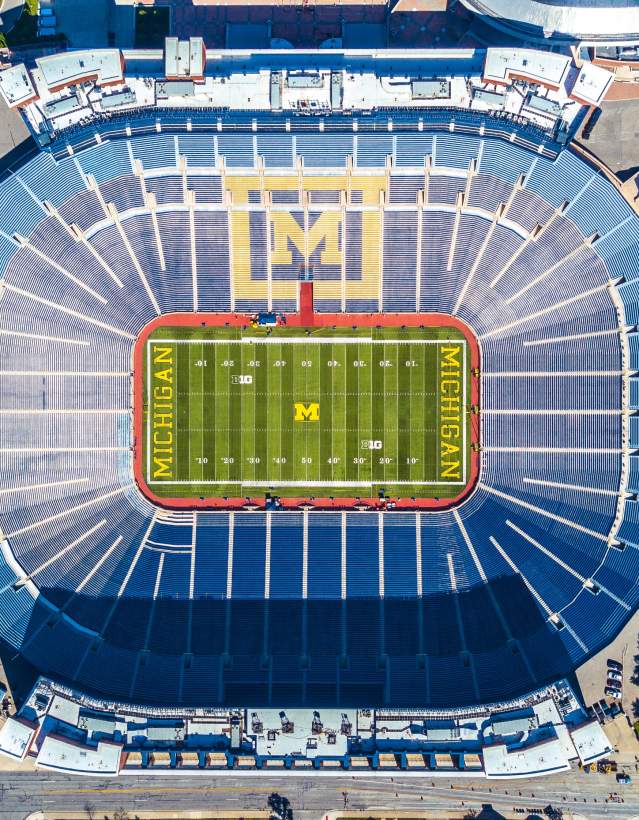
Memorial Stadium
Collegiate stadiums experience concentrated restroom demand during predictable event windows. Consistent fixture systems can simplify pre-event inspection, game-day response, post-event cleaning, and scheduled preventive maintenance.
View Memorial Stadium ReferenceWolf Trap Theater — Virginia Architectural Faucets
Performing-arts venues can experience sharp peaks in restroom use before performances and during intermission. Maintainable touchless systems help facility teams minimize operational disruption during those limited service windows.
View Virginia Architectural Faucet ReferenceHershey Theater
Entertainment facilities similarly benefit from touchless systems whose servicing requirements can be addressed quickly between periods of intense public use. Accessible and predictable maintenance procedures support restroom availability during scheduled events.
View Hershey Theater ReferenceGood Serviceability Continues After Construction
Even a well-coordinated installation can become difficult to maintain when closeout information is incomplete. Facility teams should receive clear model identification, valve diagrams, power information, replacement-part references, sensor adjustment procedures, cleaning recommendations, warranty documentation, and commissioning records.
Large owners may also benefit from assigning asset identifiers to restroom zones or individual fixture banks. Technicians responding to a work order can then retrieve the correct documentation before entering the room. Standardized faucet families allow common components to be stocked centrally and incorporated into recurring technician training.
Preventive maintenance should focus on components likely to affect everyday operation: outlet condition, filter cleanliness, sensing area, supply connections, power status, visible leaks, automatic valve response, and fixture mounting. The objective is not excessive intervention; it is early identification of conditions that could eventually remove a fixture from operation during peak demand.
Serviceability Should Be Designed Into the Restroom From Day One
Maintenance-friendly touchless fixtures support uninterrupted restroom operation by making routine service faster, more predictable, and less disruptive. The strongest approach combines accessible components, fixture-level isolation, standardized models, coordinated power, dependable sensing, documented replacement parts, and adequate service clearances.
Those decisions become increasingly important as fixture quantities grow. Removing only a few minutes from a repetitive service task can create meaningful labor savings when the procedure is repeated across dozens or hundreds of faucets. More importantly, faster servicing helps keep wash stations available during periods when building occupants need them most.
Architects and MEP engineers can support long-term facility performance by coordinating maintenance access before counters, mirrors, partitions, cabinets, access panels, supply piping, and electrical systems are finalized. Facility management personnel should participate in fixture review so practical questions regarding batteries, controls, shutoffs, replacement parts, cleaning, sensor access, and spare components are resolved before procurement.
The result is not simply a touchless restroom that performs on opening day. It is a maintainable building system designed to support the full operational life of a stadium, arena, university, theater, healthcare facility, airport, office complex, or other high-traffic property.


Pingback: Flow-Rate Compliance Requirements in Commercial Restroom Engineering – ArchDaily Blog
Pingback: Plumbing Infrastructure Compatibility in Large Venue Restroom Projects – Daily Architectural