Surface finishes on bathroom sink faucets are more than decorative elements they are engineered layers designed to protect base materials, support hygiene, and withstand repeated exposure to water, cleaning agents, and daily use. For architects, engineers, and specification professionals, the understanding of the finish maintenance & cleaning protocols is necessary for preservation performance, extending service life, and reducing long-term operational expenditures.
Technical Maintenance Insight: Studies in residential plumbing environments show that routine weekly cleaning with pH-neutral solutions can significantly reduce mineral scaling and surface corrosion, extending faucet finish lifespan by several years. Avoiding abrasive cleaners helps preserve PVD, brushed nickel, and chrome coatings, maintaining both performance integrity and aesthetic durability.a
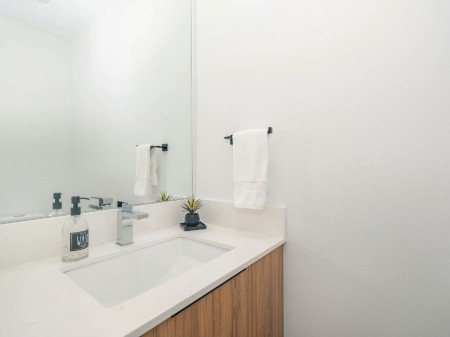
Why Surface Finish Maintenance Matters
Faucets in bathroom sinks are one of the very most touched types of fixtures commonly found in residential blocks & multifamily settings. Their surface finishes should have anti-corrosion properties, anti-staining, wear and microbial resistance with the appearance remaining the same as time goes by.
- Preserving corrosion resistance and protective coatings
- Preventing premature finish degradation and discoloration
- Maintaining hygiene and cleanability standards
- Reducing warranty claims and replacement cycles
- Supporting long-term lifecycle performance
Common Faucet Surface Finishes and Their Characteristics
Various faucet finishes are not very receptive to the environmental exposure and cleaning techniques. Knowledge on finish techniques & technology is necessary to familiarize with the maintenance rules.
Typical Finish Types
- Polished chrome, valued for durability and ease of cleaning
- Brushed or satin finishes designed to reduce visible fingerprints
- Physical Vapor Deposition (PVD) coatings offering enhanced hardness
- Matte and specialty finishes requiring controlled cleaning protocols
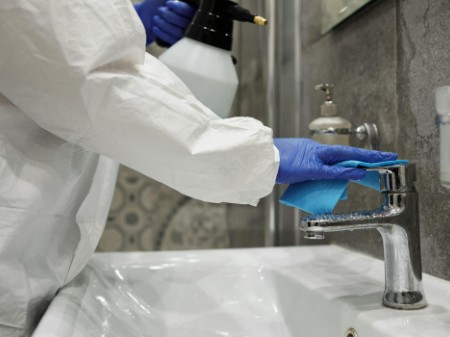
Environmental Factors Affecting Finish Longevity
There are multiple environmental factors that makes up the way in which faucet finishes wear out with passage of time, specifically in residential & multifamily bathrooms.
- Water chemistry, including hardness and mineral content
- Frequency of use and hand contact
- Humidity levels and ventilation conditions
- Exposure to aggressive or improper cleaning chemicals
Normal amounts of moisture accumulation & mineral deposits are redundant causative factors of finish dulling and spotting when it’s not taken care of with attention.
Recommended Cleaning Protocols for Faucet Finishes
Most manufacturers and industry guidance recommend gentle, non-abrasive cleaning methods to preserve finish integrity and appearance.
- Clean using a soft cloth with mild soap and water
- Rinse thoroughly to remove cleaning residue
- Dry surfaces after cleaning to prevent water spotting
- Avoid abrasive pads, powders, and acidic cleaners
Alcohol or bleach cleaners must only be used if explicitly approved by the manufacturer, as they may degrade the protective coatings with the passage of time.
Institutional and High-Use Considerations
In the residential areas for example student housing or mixed-use developments, faucets may be subjected to be exposed to frequent cleaning and stronger disinfectants.
- Select finishes compatible with routine disinfection protocols
- Coordinate cleaning guidance with facilities management teams
- Review finish warranties relative to intended cleaning practices
Material & finish compatibility documentation are available on FontanaShowers Faucets Materials and Compliance.
Touchless Faucets and Finish Maintenance
Touchless faucets reduce physical contact, slowing finish wear and fingerprint buildup, but still require suitable level of cleaning around the sensors and the spout places.
- Avoid overspray into sensor windows
- Use non-abrasive cloths near electronic components
- Prevent residue buildup that may affect sensor performance
Touchless faucet types that are suitable for residential and crossover use are available for the reviewed on FontanaShowers Commercial Sensor Faucets. Technical background on automatic faucet systems is available at Automatic Faucet.
Finish Maintenance and Material Selection
Finish durability is closely tied to the underlying material and coating process. High-quality finishes are generally applied over engineered substrates that are designed for a long-period exposure.
- Lead-free brass bodies
- Stainless steel substrates
- Multi-layer protective coating systems
Broader faucet system categories illustrating different material approaches can be reviewed at bathroom-sink-faucet.com and FontanaShowers.
Documentation, User Guidance, and Long-Term Care
For AEC professionals, the finish maintenance must be addressed properly in the project documentation and closeout materials.
- Include manufacturer-approved cleaning instructions in O&M manuals
- Educate occupants or property managers on acceptable cleaners
- Align finish warranties with documented maintenance protocols
Comparing Faucet Categories for Finish Durability
The review of diverse faucet categories assist the designers to evaluate how various finishes and coating technologies perform under real-world maintenance situations.
Relevant resources include bathroom-sink-faucet.com, FontanaShowers, Commercial Sensor Faucets, BathSelect, and JunoShowers.
Conclusion
Enhancing surface finish and cleaning standards should also play a vital role when specifying bathroom sink faucets. By understanding surface finish technologies, environmental conditions, and proper cleaning techniques, an AEC professional has a wide range of options to ensure that a faucet retains its performance as well as its aesthetic qualities.
Viewing finishes on surfaces in terms of engineering systems rather than purely aesthetic accessories has always resonated with the main ideology of bathroom-sink-faucet.com: to provide technologically well-informed advice.
References
- Manufacturer Faucet Finish Maintenance Guidelines
- Water Quality and Fixture Durability Studies
- Plumbing Materials and Surface Coating Standards